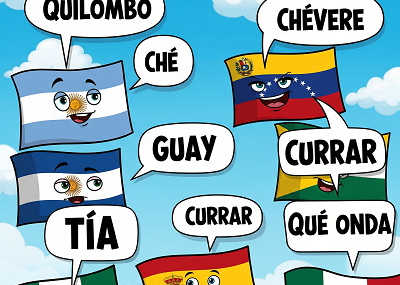
One of the most fascinating aspects of Spanish is that it’s spoken in over 20 countries — and while the grammar remains consistent, vocabulary often changes dramatically.
The same word can have a completely different meaning depending on where you are. Sometimes it’s harmless, but other times… it could lead to an awkward (or funny) situation.
Understanding these differences can make your conversations smoother and help you avoid misunderstandings while traveling, studying, or working in Spanish-speaking countries.
🗺 Examples of Words That Vary Across Countries
1. Guagua
- Cuba, Canary Islands: Bus
- Chile: Baby
Imagine asking for the guagua in Santiago de Chile and being handed a baby instead of directions to the bus stop.
2. Torta
- Mexico: Sandwich (often with a bread roll)
- Spain, Argentina: Cake
3. Coger
- Spain: To take, grab, catch
- Mexico, Argentina, many others: A very explicit sexual verb 🤭
4. Mono
- Spain: Overalls
- Latin America: Monkey
- Chile: Cute, sweet
5. Piso
- Spain: Apartment or floor of a building
- Latin America: Floor (surface you walk on)
6. Concha
- Spain: Seashell
- Argentina, Uruguay: Very vulgar slang for female anatomy
7. Camión
- Mexico: Bus
- Spain and most other countries: Truck
8. Papaya
- Most countries: Fruit
- Cuba, some Central American countries: Vulgar slang in certain contexts
💡 Tips for Navigating Vocabulary Differences
- Ask for clarification
If you hear an unfamiliar word, it’s okay to ask: «¿Qué significa aquí?» - Learn regional alternatives
Make a note of different words for the same concept when studying Spanish. - Use context clues
Even if the meaning changes, tone and situation often reveal what’s intended. - Laugh it off
If you make a vocabulary mistake, take it with humor — it’s part of learning.
📚 Resources to Explore Regional Vocabulary
- Diccionario de americanismos – by the Real Academia Española.
- WordReference forums – great for user-generated regional explanations.
- YouTube travel vloggers – real-life examples of local usage.
🗨 Closing Thought
«Spanish is one language, but it holds multitudes. Learning its regional variations is like collecting keys to unlock different cultures.»